Wednesday, November 19, 2014

Falling in Louvre with French Food

Flavors in image may be larger than they appear...
Our train ride to Paris was a bit more cramped than we might have liked; arriving to the city we were in need of a heaping serving of feel-good food. As luck would have it, we spotted a Vietnamese restaurant across the street from our hotel as our cab pulled up. Some might have scoffed at the idea of eating Asian while visiting a culinary capital like Paris; but remembering that Vietnam and France have shared influence (culinary and otherwise) due to their intertwined history of French colonization in the Asian nation, we were secure in our decision to eat there… not to mention the ache in our bellies for comfort food that wasn’t 51% butter. Julia spotted one of our favorite Vietnamese dishes as she scanned the menu: rice crepes with minced shrimp and pork. It was a good sign, further exciting us for the meal ahead.

The other French crepes.
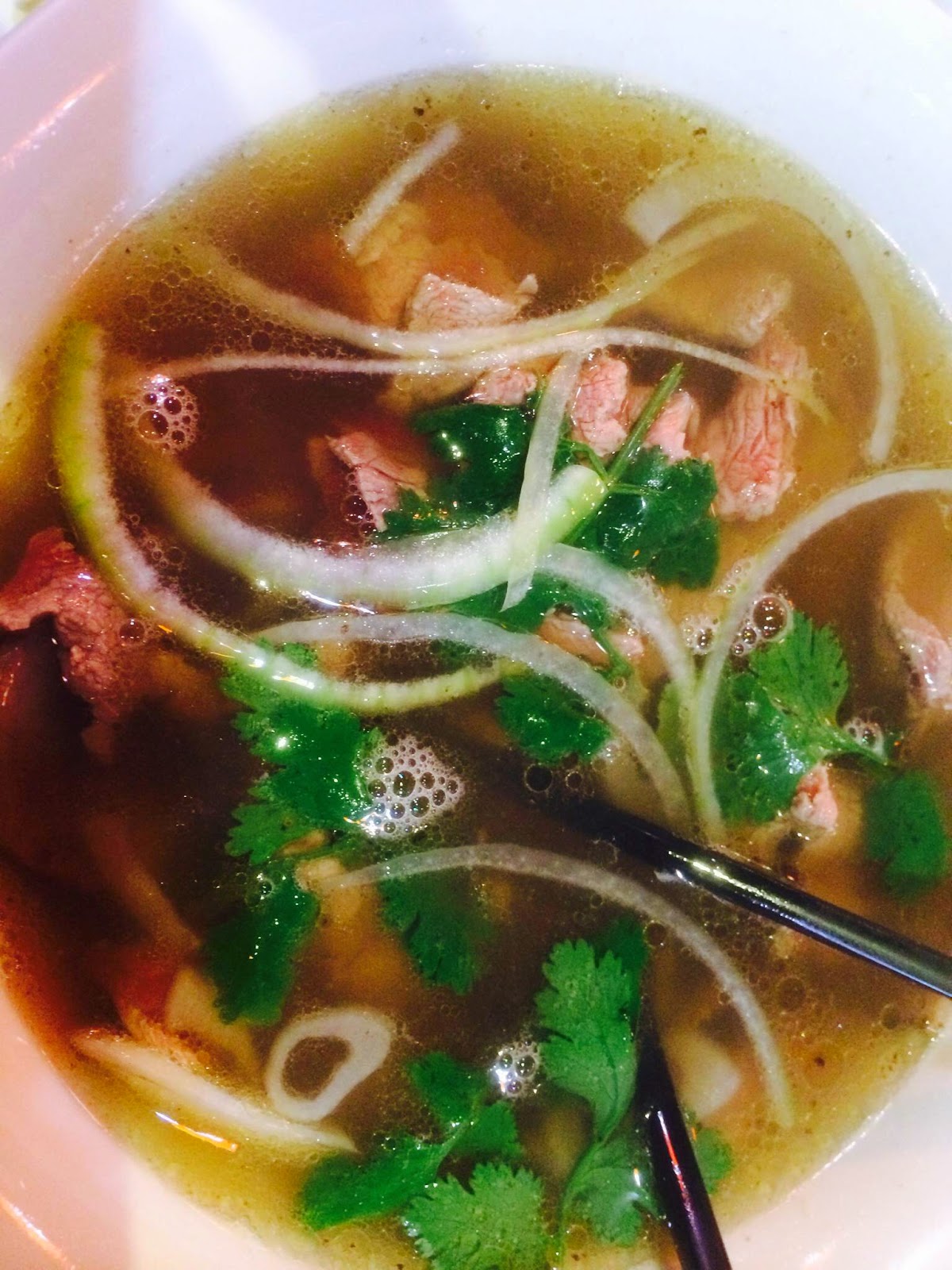
The crepes were chewy and sumptuous, sprinkled with torn mint and crunchy bits of toasted garlic; their familiar flavor and texture spread big grins across our faces. Giant bowls of Pho came next, wafting aromatic steam to our noses enticingly, and our faces instinctively moved closer to appreciate the wealth of broth and beef below. We slurped noodles ravenously, the bowls’ contents warming us, in every sense of the word. Spoonfuls of sambal and fragrant sprigs of cilantro and Thai basil piled into the pot, mingling with tender ribbons of beef and the familiar flavors of Pho. The meal did everything we’d hoped, transforming us from weary, tousled travelers into cozy babies, with bellies full and hearts content.

We hit the streets of Paris the next morning, energized by a good night’s sleep and breakfast at the hotel. While we didn’t have a specific plan for the day, we aimed to avoid touristy restaurants as best we could as we continued the quest for more iconic French food. Macaroons were our first success: Julia spotted a promising display in the window of a sweet shop, entering to discover a beckoning landscape of French pastries and desserts. Nearly overwhelmed by the seemingly endless array of goodies, we managed to show restraint and purchase one macaroon each: Julia’s was sea salt & caramel; mine, Granada dark chocolate. Both were impossibly light and absolutely scrumptious, each bite melting into sweetness on our tongues as we finished them in a matter of seconds.

After visits to the Louvre, Notre Dame, and a few other Parisian monuments that left my mouth agape in awe, our grumbling bellies informed us it was time for lunch. We scanned the streets as we walked and did our best to rely on our instincts, a method that typically serves us well when travelling. The café we eventually decided on looked cozy, its menu belying an ample array of the kind of French cuisine we were looking for. Julia started with Onion Soup, and we were eager to see how this version measured up to our expectations. While it certainly sported the bubbly, broiled roof of cheese we were hoping for, the broth itself had a creaminess about it that wasn’t entirely pleasant, likely the result of being thickened with a slurry. My plate of escargot, on the other hand, was a straight-up bullseye: garlicky, herb-flecked butter spilled from delicate shells as I handled them, the tender, chewy snails hiding within. I savored each bite as I plucked them from their homes with a dainty fork, gluttonously mopping up pools of spilled butter with soft hunks of baguette.
The shells were crunchier than I expected...

Julia’s entrée of steak & "frites" certainly outshined her soup: the beef was cooked a spot-on medium-rare, the fries a successful and satisfying vehicle for soaking up savory steak juices. My entree was a small, but tasty, breaded chicken breast accompanied by a generous mound of carrot puree. And while I could taste the liberal amount of butter that went into the carrots, it was nice to get a serving of vegetables; my body thanked me.

After lunch we walked back to the hotel, looking forward to a nice, long siesta, which meant a bath for Julia and some blogging for me. Only a few steps from arriving, we passed a restaurant that caught our eye; scoping out the menu, we decided it had promise for dinner that night. When mealtime arrived, we did a couple of laps around the surrounding blocks for comparative options, but in the end, returned to the spot situated but a few doors from our hotel.

Julia started with the “Pumpkin Cappuccino,” a tasty, velvety squash soup topped with sweet pumpkin foam. I went with escargot, despite having eaten them for lunch that day; only this time they were out of their shells, mixed with sautéed oyster mushrooms, and swimming among a rich, creamy broth topped with anise foam: absolutely incredible. My favorite part of the dish was the playful similarity in texture between the snails and the mushrooms, nearly indistinguishable at times. It was some of the most enjoyable chewing I’ve ever experienced.

I followed up with scallops over squid ink tagliatelli. Though the flavors were delicious, both the pasta and the scallops could have been better executed: the former lacked its al dente bite, while the latter lacked the beautiful brown at its ends that indicates a proper pan-sear. Nevertheless, it was an enjoyable dish. Julia had pheasant, with bacon-braised cabbage and Loganberry compote. The cabbage reminded me of my grandparents’ sauerkraut, salty and juicy, smoky from the bacon; and the zing of the compote accented it well. Dessert was a quince tart for Julia, yielding tasty fruit but a wholly lackluster crust; my molten chocolate cake, on the other hand, excellent: rich as can be, the ganache inside spilled out of the cake at the perfect consistency and temperature as I plunged my spoon into its heart. Fat kid heaven.
Molten chocolate: doesn't burn your tongue like molten lava.


Scraps of happiness!
For lunch the next day, the plan was to head in the direction of the Eiffel Tower for a picnic; but the key was to find a place to buy the food that wasn’t too near the touristy area surrounding the tower. Though it took some time, some patience, and at least one bathroom break (along with a couple of espressos, required to access said bathroom), we eventually came upon a quaint, little Italian storefront, cluttered with kitschy food-related memorabilia. Peering through its windows, it appeared we had found the spot. In addition to four small tables serving Italian food, there was a wall of retail items, a large section of it refrigerated. We carefully examined its wares, and eventually decided on some sliced Parisian ham, a couple of goat cheese medallions, and a jar of marinated mushrooms. We snagged a baguette and a bottle of bubbly at another nearby market, and voila! We enjoyed our picnic with the Eiffel Tower in full view, then sat back to digest and soak it all in.

Dinner that night was as much a mission as it was a meal: Roast Chicken. A regular staple in our household, roast chicken is something we rarely go even a week without eating. It occurred to me only just now: that’s why we must have been craving it so bad. At any rate, we did a bit of homework and found a restaurant not too far away whose menu sported a well-recommended roast chicken and a number of other tasty items that made our bellies growl. Mission accomplished.

As we settled in at a cozy table toward the back of the restaurant, we debated who would get the chicken. As a team, we despise ordering the same dish when eating out, so it was a foregone conclusion that only one of us would be taking ownership of the coveted chicken. Having alluded to something along these lines in my wedding vows (true story), I deferred to Julia, and went with the bouillabase, not at all disappointed with this outcome. Considering our entrée choices, we ordered a bottle of Pouilly Fume, a dazzling white wine from near the Loire: its crisp, bright flavor danced with green apple and grapefruit and promised to complement our food nicely.

First course for Julia was a simple but spectacular bowl of Chanterelles sautéed in butter; I had lamb sweetbreads, over an unlikely salad sprinkled with hazelnuts and dried fruits. Julia’s mushrooms were tasty, tender, comfort in a bowl: there is just something special about French butter. My sweetbreads were cooked beautifully, tender with a little bite, yielding an ocean of flavor that washed over me as I sank my teeth in to their succulent flesh. Their juices ran all over the plate and among the salad, adding a deeper, meaty layer of flavor beneath its sweet dressing. I made sure not a drop was wasted.

Julia’s chicken did the job, satisfying the longing we had felt; benevolently, she shared some with me. Roasted potatoes with crispy edges accompanied the bird, along with a head of roasted garlic: a kit to build yourself bite after perfect, scrumptious bite. My bouillabase was quite the generous portion and no less satisfying. Warming aromas of tomato and fennel wafted from the bowl, as tender pieces of fish lay bathing in thick, luscious broth. I needed only my spoon to break up the pieces, and I savored their delicate flavor as they fell apart on my tongue, the texture complemented by a bite of crusty baguette soaked in the flavorful broth.

We passed on the dessert menu, knowing what awaited us in our hotel room. Another stop at Julia’s sweetshop earlier that day had left us with two serious treats: Julia’s was an oversized raspberry macaroon filled with fresh raspberries, whipped cream, and the surprising addition of lychee. My weapon of choice was a cube of chocolate in many layers: some crispy cocoa wafers, some rich ganache, some even toothsome and solid, like incredibly thin chocolate bars, all iced in a layer of chocolate ganache. Did I mention there was chocolate? We both sat happily in bed, watching French-dubbed Friends, as we destroyed our respective desserts like sugar gremlins.

For our last full day in Paris, lunch was to be completely off the French grid. In the process of planning our trip, we’d taken some recommendations from our friend Andrew, who’d lived and cooked in Paris. Among his list was a falafel spot in the city’s Jewish neighborhood; though a falafel suggestion in Paris had raised our eyebrows initially, we now understood Andrew’s assurance that we’d want at least a small break from French food at some point. Always excited about the prospect of quality ethnic fare, we took off across the city, licking our lips and fantasizing about impending, overstuffed pitas. We knew we’d made our way into the neighborhood when we began spotting Hacidic Jews here and there; a few lefts and rights through its streets and alleys and we had arrived. The line out front made the shop easy to spot, and we fell right in.

All the fork did was get in the way.
Our order was simple: two falafel with everything, and make it spicy. In a matter of minutes, we had hot lunch in our hands, its contents spilling out the top. We found a bench so that, in a sitting position, we could properly focus on eating without spilling. I am proud to say, I spilled only a few pieces of cucumber and the tiniest morsel of falafel, all of which became nourishment for a nearby pigeon who had been eyeballing us since the moment we sat down. We ate almost in silence, savoring the familiar flavors and enjoying the ample sustenance stuffed into soft, warm pita. Crunchy, chewy, spicy, salty, tangy: the crispy falafel and its assortment of condiments hit all the right buttons. The crunch of raw vegetables, in particular, was a welcome sensation, one we had not enjoyed since arriving on the continent.

After lunch, we noticed signs for the Picasso museum and followed them, spending the rest of the afternoon wandering its many floors and rooms. On our way home, we scoured the streets until we found a crepe cart offering Speculoos, and Julia got her fix; I went with dark chocolate spread inside mine. We sat on the stoop of a nearby monument and sighed repeatedly as we chomped into the hot, chewy crepes, their gooey insides peeking out only long enough to get swooped by our fingers. I cannot overstate the revelry in our realization of one final iconic treat: street crepes in Paris.

Our last meal in the city was, without a single, solitary doubt, the absolute best. Dinner was at the Basque restaurant Chez L’Ami Jean, another of Andrew’s recommendations; to our delight, they had been able to squeeze in one last reservation for us. Upon arriving to the restaurant and being led to our table, “squeeze” proved to be quite the appropriate word: the place was bustling, cozy, and full. All of the two tops against one wall were completely pushed together to accommodate maximum occupancy, so that our table actually had to be pulled out of line to allow me to shimmy to my chair. As we settled in, we thanked our stars that we didn’t speak the local language, as it was the only fact providing any amount of privacy. Though as we began to notice the plates coming out of the kitchen, we focused less on privacy and more on not drooling.

The menu was entirely in French, only peppered here and there with words and phrases we recognized, and in the spirit of our last night in Paris, we just went with it. As a starter, “Pulpo” was an easy target: octopus, one of my favorite foods in the world, and a signature Basque dish. It came to the table perfectly cooked and thinly sliced, complimented by avocado mousse and crunchy sea salt. It was not the first octopus we’d eaten on our trip, but it was the most superb; Spanish treatment of the easily marred mollusk tends to be on the rustic side, and this was exquisite, with just the right amount of bite.

Hard to believe this is baby cow...
For entrees, Julia had ordered veal, a pretty safe bet in a Parisian Basque restaurant; and when we saw a spectacular-looking plate of veal cheeks arrive to the table next to ours, it appeared she was in for a treat. The plate the waiter placed in front of her, however, was decidedly not the veal cheeks. Instead, we found ourselves staring, wide-eyed, at the biggest, most beautiful veal chop we’d ever encountered. It glistened in all its glory, releasing smells that would unleash a tidal wave of salivation from anyone who dared inhale. Julia went to work on the mighty hunk of lovingly prepared meat, and it was as tender and juicy as it was a spectacle to behold. It sat atop two large mushroom caps that hinted at maple flavor (almost like enormous candy caps), and came with a small crock of mashed potatoes that were, in classic French form, at least 50% butter. But most awe-inspiring, hands down, was the fat. Oh, the fat.

The tastiest morsel!
Usually when eating steak, I’ll cut a little morsel of fat off here and there, just to add a kick of flavor and mouth-feel when chewed along with the steak itself, as most do. But one tiny nibble of the fat from this veal chop and it became clear we would be finishing it. It tasted of rich nuts, a flavor most likely imparted from the finishing diet of the calf, and its texture was not the gelatinous, squishy state one normally expects from beef fat, but more like actual meat than any other specimen I’ve ever encountered. Beyond satisfied, we agreed it was the best thing we’d eaten on our entire trip thus far.

Pigeon: The Other Foie Gras?
My pigeon entrée had a hard time measuring up to veal-zilla, but I loved it. Though the bird itself was gamey, it came with a side of pigeon foie gras, which turned out to be a true stroke of genius. Not only was the chef making use of the pigeon’s offals (it was certainly my first experience with pigeon foie), he was offsetting a typically tough and gamey meat with something rich and luscious. Together, it was pigeon harmony, each part needing its counterpart to truly sing. Add to the mix some dainty chanterelles and carrots perfectly braised in pigeon jus, and the plate was complete. All that was left at the end of the meal was a discarded pigeon carcass.

I would be remiss not to mention dessert, as we ordered the one for which the restaurant is famous: rice pudding. Apparently, massive serving size is not limited to the veal chop, as the rice pudding arrived in a bowl big enough to feed a table of six. Truly making the effort, we spooned big piles onto our plates, garnishing them with the adjoining accouterments: burnt nut brittle and caramel mousse. Even as satiated as we thought we were, it was tasty enough to bring spoonful after spoonful to our smiling lips, and I have to admit, rice pudding had never tasted so good.

Unable to eat another bite, we plunged back into the brisk Paris night and strolled along the Seines, elated and chattering about the incredible meal behind us. The thirty-minute walk back to the hotel did us good, and we savored our last night in the City of Lights as the clock on the antique, riverfront train station struck midnight. It was officially our day of departure, but we were ready for our next adventures in eating. Julia had been dreaming about the next leg of the trip since we flew out of San Francisco: pasta, pizza, gelato, and so much more…


It was time to go to Italy.

Saturday, November 15, 2014

Bordeauxin’ it, and doin’ it, and doin’ it well…

Naturally, we got sick of such mundane sights almost immediately.

Arriving to Bordeaux just before nightfall, we made our way across the city toward an agreed-upon rendezvous point; the metro train windows mimicked museum art as the train rolled through the city, framing passing buildings and monuments that radiated majesty and beauty. We were staying with Stefan and his girlfriend Marie (Stefan is a friend of Julia's from her time living in Torino), and the plan was to meet him after he finished work to have dinner. Julia and I knew very little about Bordeaux, so we were thrilled to have Stefan as our guide, putting our stomachs in his capable hands.

After a quick stop at the apartment to drop off our things, we set out on foot through the streets of Bordeaux, Stefan pointing out various items of interest as we walked. The city was charming, rife with breathtaking architecture and art that adorned even the most seemingly mundane street corner or storefront. Less than ten minutes walking and I was captivated by my surroundings, enamored with Bordeaux and ready to start shopping for vacation homes.

Stocking the bomb shelters of the 1%.
Dinner was at a small, unassuming restaurant owned and run by a friend of Stefan’s. The first part of the operation, which we passed through on our way to the dining room, was focused on the sale of packaged food items. Julia and I poked each other with excitement as we surveyed the wares: weck jars of dainty marinated mushrooms lined one shelf, tins of foie gras and pate were stacked upon another. Pristine pickled white asparagus stood at attention, carefully arranged in a jar of perfect size and shape. It was a food-lovers dream, French food fit for an altar.

Moving through the retail space and into the restaurant, the immediate impression was how small and personal it felt, almost as if we’d unassumingly walked in on the chef preparing dinner for friends in his home. The kitchen was fully in the same space as the dining room (which consisted of little more than a few four-tops), separated only by a small countertop, and the very epitome of minimalism: a single induction burner, a fridge, and a few countertops. The idea that the chef worked within such constraints was surprising to say the least, but Stefan assured us we had plenty to look forward to.

The menu was a chalkboard, listing the day’s offerings in the forms of tapas, a mere seven in number.  Having just eaten our way through the tapas capital of the world, we had our doubts, but we trusted that Stefan would not lead us astray, further reassured when we considered the shelves full of house-made and otherwise well selected goodies we’d witnessed moments earlier. Adding to our excitement and quelling any last trace of doubt: it was truffle season, and the chef brought us a Tupperware full of Alba truffles to pique our excitement and our appetites.

Gulliver's tapas?
Rather than have us order, he informed us that he would be bringing us two of everything, which sounded just about perfect. He and Stefan conferred over wine, and a bottle of (can you guess?) Bordeaux arrived to the table. Its bouquet alone was enough to give me butterflies; one sip and we were in heaven. The wine rolled about our palates luxuriously, its hints of dark fruit and subtle notes of spice set against a background bold, yet balanced. We sipped gleefully and clinked glasses, reveling in the beauty that can come from nothing but spoiled grapes. It wasn’t long before our tapas arrived, plated playfully in bar glasses and tiny, precious cast-iron pots. We took a moment to appreciate the attractive presentation and various beckoning aromas; then we dove in.

My first taste was a parsnip veloute with crispy crumbs of Serrano ham and chopped pistachios. Each element had its own flavors of sweet, salty, and nutty, and together they united cooperatively to create a delicious chord. Julia worked on the beef tartar, a dish we came to find was ubiquitous in French bistros. This version was pre-mixed and studded with tiny dice of cornichons, their tanginess and crunch an apt foil for the velvety beef. The most creative of the lot was the carrot ‘spaghetti’ with curry and peeled grapes, pops of sweetness and crunch among an earthy, spicy background.

Le BOOYA.
Butternut squash with chestnuts and onion jam elicited festive, holiday feelings, different notes of sweet mashing together in harmony. A pile of dainty, succulent shrimp sat atop buttery, comforting melted leeks: beauty in balanced simplicity. Last, but so not least, were the truffled tapas: one was perfectly scrambled eggs, the other, creamy mashed potatoes. Why complicate things? The slices of truffle that perched atop each dish, with their delicate, pebbled texture, looked almost too pretty to eat… almost. We plunged our spoons into the tiny pots of heaven, the steam trapped below carrying the earthy aroma of truffles to our noses.

Though we did our best to make the meal last, it was over before we knew it. Sensing we weren’t quite full, the chef poured us a bit more wine and brought a wooden board of truffle-studded ham: the subtle sweetness and salty kick of the ham played well against the flavor of the truffles, and I was giddy at how fantastic something so simple could taste. Some thinly sliced sheep cheese with cracked pepper and house-made, last-of-the-season plum jam came next, a superb finish to the meal as we chased the last few drops of wine from our glasses.
My favorite digestif... ham.


The next day, Stefan had to leave the city for a family obligation, giving us a day to explore the city by ourselves… after he equipped us with copious recommendations for neighborhoods, parks, and bistros, of course. We started the day by grabbing a baguette and enjoying a stroll through the city's meandering parks and botanical gardens, stopping here and there to appreciate the ducks and geese or admire the gorgeous history and architecture that seemed to surprise us around every corner. Most of the morning was spent this way, walking to nowhere in particular and munching our baguette, getting to know Bordeaux.

By the time lunch rolled around, we had walked up quite an appetite, and we made our way to L'Autre Petit Bois (translated, as best I can muster, to 'the other kindling') by way of Stefan’s recommendations. As we entered the tiny bistro and our eyes adjusted to the light, we all but fell in love. Decorated in a style I can only describe as Alice in Wonderland-chic, the space was cozy and stylish at the same time. Whimsical teapots adorned the shelves behind the bar, and an oak tree stretched its limbs across the ceiling, dried leaves still adorning very real branches. We settled in to a table and were still taking in our surroundings when menus arrived. I needed only a moment to peruse; Stefan had tipped us off that this place served a Croque Monsieur with foie gras, and there was no way in holy hell I was passing that up. Julia ordered a duck cassoulet with melted Gruyere, and, of course, a couple of glasses of Bordeaux (honestly, why would we order anything else?). The food arrived quickly, and it did not disappoint. While I expected the foie to add heaviness to the sandwich, it did quite opposite: its sweet creaminess complimented the ham and cheese almost like a fruit spread. The flavors swam together dreamily and the textures were even more pleasing: crunchy toast gave way to chewy ham and melty, stringy gruyere, with a rich coating of foie all over every bite.
The salad makes it all okay.

Julia’s cassoulet was no slouch either: the duck melted in your mouth, mingling with pungent cheese and buttery mashed potatoes. It was the acme of comfort food, and every bite sent us straight to heaven. Dessert was a sinfully tasty chocolate cake and a cheesecake that put its American counterpart to shame: rather than the two-ton, dairy-heavy belly bomb I thought I knew, it was light as air and fell apart as you ate it. I wish all cheesecake was that cheesecake. We walked out grinning like idiots, bellies full and eyelids drooping happily. Without a doubt, we had hit ‘le bullseye’ with this place.

Dinner was at Bar Cave, another spot Stefan had recommended. It was a decent walk from the apartment, always a blessing when you eat the way we do. We walked along the river, enjoying the nighttime beauty of Bordeuax and feeling on top of the world. Arriving at our destination, we found our reservation had secured us the last indoor table; cozy and crowded, it smelled like mom’s kitchen, and we knew we were in for another great meal.

Julia was interested in the soup, but we had trouble translating its description on the menu, so she inquired. The one-word response of “veggies” was good enough for her, particularly due to our diets of late having left our bodies craving vegetables like whoa. She ordered the Camembert salad as her entrée, while I beelined for duck breast with orange-honey sauce and frites, happy to continue on the train of iconic French cuisine. The duck was perfectly cooked: crispy, scored skin atop medium rare flesh as plump and pretty as a plus-size lingerie model, a picture-perfect pile of fries alongside. Julia’s salad, however, stole the show.

Jacuzzi for two?
We had pictured, I suppose, its American version: a little puck of cheese atop a mountain of greens. Instead, we were treated to what looked more like fondue: a small green salad beside a bowl containing an entire wheel of Camembert, melted to a completely molten state and giving off aromas that still haunt my dreams. We ripped into hunks of crusty bread and swooped them through the inviting pool of Camembert with abandon. The flavor and aroma were intoxicating, an exquisite balance of sharpness and pungency that drowned our senses in delight. For dessert we decided on pain perdu (the original French Toast) with crème anglaise. The lightly battered slices of baguette invitingly wafted cinnamon to our noses as they soaked up vanilla custard. Thankfully, the portion wasn't too big and we enjoyed every sweet, delectable morsel.

Sunday, we awoke to breakfast in the apartment, courtesy of the lovely Marie. We snacked leisurely on pastries and coffee as the day was planned; we were to meet Stefan in St. Emillion, a town about 30 minutes from Bordeaux by car, that had gone virtually unchanged over the last hundred years. We walked the city for a bit, marveling at the ancient, grayed houses, churches, and cobblestone alleys, feeling like we had wandered into another time. Julia discovered that the town was famous for a very specific kind of macaroon (her favorite cookie), one with a texture so ethereal it melted in your mouth, defeating your ability to hide a smile. She bought a box and we opened it immediately, polishing off half its contents in minutes.

Cheese portions in France are apparently 'huge amount' or 'all of it.'
Knowing man cannot live on macaroons alone, we found a restaurant for lunch. After a bit of explanation on certain French menu items from our hosts, we placed our orders. Julia started with a goat cheese terrine, its texture so moist and rich you could have called it a cheesecake. The rest of us went with onion soup. When it arrived, the interpretation placed before us gave me pause: rather than the bubbly, broiled crock, with its roof of melted, brown-specked cheese, that I had grown accustomed to back home, this was more a DIY version. Each soup was a bowl of onion and beef broth, accompanied by croutons and shredded Gruyere. I dumped both into my soup, watching the cheese slowly melt and swirl as I stirred it around. And though I do prefer my cheese brown and bubbly, this version certainly hit the spot.

Sausage for the people.
For entrees, Stefan ordered the ever-popular beef tartar, while Marie and I went with duck confit and mashed potatoes. Julia ordered the Andouillette, a rustic French sausage filled with pig offals: and I don’t mean ground pork shoulder with some offals mixed in. The casing was filled entirely with offals (no ground pork whatsoever), so that when you cut into the sausage its texture spilled out, rough and chunky, and you could essentially identify the different parts of the pig’s insides. Unfortunately for Julia, it was a bit strong, and she requested we swap. One bite of the Andouillette and I nodded enthusiastic agreement. As a former vegetarian forever trying to make up for lost time, strange and unfamiliar meats appeal to me more than most; and though the flavor was intense, I found that with a little spike of the accompanying whole grain mustard and a morsel of mashed potato, it was pure, piggy heaven. I can offer no other way to describe its flavor than to say it was the most intensely porky food item I have ever tasted. The pungent, chewy bits demanded your attention like a surly, snouted brothel madame, lingering on your tongue and in the corners of your mouth after you swallowed. I enjoyed every bit, particularly with the complement of another terrific bottle of Bordeaux that Marie selected for the table. Once again, we were getting a true taste of France, unadorned and unforgettable.
Sausage for the brave.

As the day neared its end, we made one final journey to Sauternes for a special chateau tour and tasting, something that happened, Stefan explained, only once a year. Sauternes produces sweet wines, so the tasting was a refreshing and delicious change of pace from the big, red Bordeaux blends with which we had (understandably) inundated ourselves since arriving. Though the tour was in French, Stefan translated the interesting parts. We tasted some spectacular wines, and Julia bought a bottle to bring home, actually the only bottle we bought our entire time in the country.

We cooked dinner in the apartment that night, as a thank-you to our gracious hosts. We’d found an absolutely gorgeous beef loin in a nearby butcher shop, impeccably trussed and begging to be bought. A produce market, located conveniently across the street, gave us chunky, oversized porcini mushrooms, vibrant leeks, and the most fragrant celery root we’d ever encountered. What more could two chefs in France ask for?

Stefan had shamefully admitted to having zero kitchen ability (Marie did any and all cooking in the house), so he joined us in the kitchen, picking things up quickly and asking plenty of questions. We made a rub for the roast with roasted garlic, Dijon, and honey, mashed the celery root with a very French amount of butter, and turned the Porcinis and leeks into a beefy, red wine-laden condiment. I’ll let you guess what kind of wine we drank with dinner, clinking glasses and feasting like we’d let them eat cake.

For a little dessert, Stefan happened to have a handful of mini Haagen Daaz in the freezer, all different European flavors. It was here that we were first introduced to Speculoos (spoiler alert: it’s in Julia’s crepe in Paris and it’s sick), a cinnamon-hinted biscuit cookie from Belgium. One of the ice creams was flavored and flecked with Speculoos, and Julia took to it like crack in the 80’s, vowing to eat more as soon as possible.

Sunday was beautiful, albeit chilly, and we hit an open-air market situated, miraculously, beneath a massive, ancient, jaw-dropping cathedral that commanded our attention for the first ten minutes in its presence. While Stefan and Marie did a little grocery shopping among the few but highly specialized stalls (master butcher, oyster bar/sales, to name a couple), Julia and I, naturally, sought sustenance. Our first discovery was crepes, which Julia ordered with goat cheese (not spread, but applied in slabs) and honey: scrumptious, scrumptious, scrumptious. Next was a toasty mushroom empanada, warming our insides but only teasing our appetites; we needed brunch.

Brunch, for Julia, Marie, and Stefan consisted of a pastry, a soft cooked egg, a glass of juice, and a choice of coffee or hot chocolate, which is the standard brunch at the spot where we ate. I needed a bit more comfort to my brunch, so I went odd man out and got a ham and cheese tartine with a bowl of soup (“veggies,” once again) that I could have sworn was my mom’s. As we ate, we chatted and people-watched amidst the stylish, bustling Bordeaux street… but eventually it came time to turn into pumpkins and we headed home to collect our things and start the next leg of our journey. After a ride to the train station from the ever-gracious Stefan, we had a short wait and we were on the train. Au revoir, Bordeaux; Paris, here we come. City of Lights!

City of delicious, delicious lights.

Monday, November 10, 2014

The Pintxo Trail

Gang's all here!


The weather forecast in San Sebastian called for rain. Had it been our first visit to this picturesque, seaside foodie’s paradise, we might have been dismayed; but on our previous visit we’d walked all over the city, exploring its hills, valleys, and alleyways, even climbing its tiny mountain with the big stone Jesus to get the best views of the cape and the surrounding countryside. This visit, we had no real need for good weather: it’s always warm and toasty in a pintxo bar.

If you’ve never been to a Spanish pintxo bar, it’s a pretty awesome sight. Most are on the small side, the actual bar typically holding enough space for half a dozen stools, with the remaining space for standing (read: crowding). Along the length of the bar sit dozens of plates of different pintxos end to end, as many as they can fit. The plates’ contents range from simple slices of chunky tortilla espanola, to soft baguette sandwiches, each a rainbow of different meats, cheeses, and condiments, to mystery croquettes and pimenton-flurried octopus skewers. You simply get a plate and work your way down the line, buffet style, grabbing and piling whatever captures your appetite; once you’re content with your loot, they tally up your score and tell you the damage. Most items are cold, but bartenders will usually offer to warm up the things best eaten hot.

San Sebastian is well-known for its ample pintxo bars and restaurants, to the extent that there is something referred to as the “pintxo trail,” a path through the city, chasing culinary gems and local specialties from this bar to that. We, however, had our own trail to follow: seeking out our favorite spots from our last visit and scouting some new ones. The densest accumulation of pintxo bars is in the Parte Vieja neighborhood; it was no coincidence that’s where our hotel was. We checked in and headed to the streets immediately, ready to begin the trail.

The first couple of spots we decided on had a stark, traditional feel (a popular brand in these establishments) and were populated almost entirely by locals. We surveyed the bounty before us at the first bar, loaded up our plates, and ordered a couple of sidras (flat cider typical of Spain and Basque Country). Half the fun of drinking sidra in Spain is watching them pour it, always from as far from the glass as possible. In this case, the tap was angled so that the bartender could fully extend his right arm, which held the glass, while he worked the tap with his left hand. The sidra shot a good 3 feet from the tap and directly into the waiting glass, creating a heady foam but remaining unspilled. One got the sense this wasn't his first pour.

We found a small table, sat down, and took a second to appreciate the moment: back in San Sebastian, enjoying our first of many great meals, there was nowhere else we could wish to be. We chomped and chewed, smacking our lips and talking about little more than the yummy offerings before us: highlights included some of the best pickled sardines we'd ever tasted, and a genius mini-tartlette of braised beef short rib and mashed potatoes, a tiny, flaky cup of pure comfort. Julia gushed over skewers of marinated artichokes to tender you could squish them between your fingers, and we marveled at the simple beauty of jamon, goat cheese and sun-dried tomato on baguette: the home run of this uncomplicated combo cannot be overstated. We feasted like jolly hobbits, moving from bar to bar and leaving a trail of grease-covered cocktail napkins (which are notoriously and immensely inadequate in Spanish pintxo bars) in our wake.

Along our trail, we sought, and eventually found (thanks to Julia) a bar familiar to us from our last visit; only last time we'd found it too late, already feeling near satiation, and had to miss out on most of what it had to offer. This time we made no such mistake, and our good sense was rewarded. The pintxos here were a bit more modern, though no less drool-inducing.

His hopping days are over.
There were frogs' legs, fried crispy and plated dramatically on slate; we ate them like chicken wings and picked the bones clean… why dirty a fork? Juicy shrimp were wrapped in potato noodles, their texture smacking of satisfaction: a crispy, salty outside belied a sweet and sumptuous inside.
'Bound' for greatness…

Of course, the show-stealer was the pig trotter terrine (known as manitas, or "little hands") topped with foie gras. Each bite demanded that you chew slowly, savoring the richness and admiring the sweet-salty contrast; crisped, gelatinous, savory pork below melted together with sweet, creamy foie gras, creating the kind of tasting experience that induced heaving sighs from the eater. We knew we weren't going to top something so decadently over-the-top, so we threw in the towel for the afternoon and headed home for a nap.
I'm calling it: "foie-nitas!"

We couldn't even think about food until after ten o'clock that night (just like real Spaniards!). We also figured we needed something a bit more substantial than an assortment of little bites. Fortunately there was a restaurant on our street serving Spanish rice dishes, something we'd been craving since our arrival to the country. We ordered what most would call a simple paella: rice cooked with chicken stock, shellfish, shrimp, and squid. The rice was moist and chewy with just enough bite, and the essence of the seafood melted together and coated each grain with sticky yumminess. The harmony of flavors elevated the dish, their intoxicating aromas making our eyes close as visions of bivalves danced in our heads. A refreshing bottle of Txakoli was the perfect compliment to wash it all down, and we ate heartily, welcoming the comforting sustenance that tasted nothing short of home-cooked.
We didn't know whether to grab a spoon or just climb in...

San Sebastian eating rule: One item per person is never enough.
Breakfast the next morning was a foregone conclusion: pastries! We made a beeline for one bakery in particular, our favorite in town. When I’d worked at Martin Berasategui, all bread served at the restaurant came from there, which is how we’d found it on our last trip. We ordered a standard three pastries to share, deciding on a croissant, a (very amply filled) chocolate croissant , and a chocolate chip brioche. They were just as good as we'd remembered: the brioche was like eating a sweet little cloud, and the croissants flaked and crisped as we tore them apart, popping buttery morsels into our mouths like hungry hungry hippos.

Decapitation anticipation...
After breakfast, our trail lead us along the sea and across the river to the Parte Gros, another neighborhood in San Sebastian well known for its bars and restaurants. On our last visit, the restaurant Mil Catas had just won best pintxos in San Sebastian, and they were doing some pretty killer things in the kitchen. This time, we returned to Mil Catas for lunch, rain just starting to fall as we arrived. Though they didn't seem to be slinging mind-blowing pintxos these days, the menu had plenty of promise. We started with a plate of head-on prawns. Their bodies dripped succulent, salty juices all over the plate as we broke them apart, and after we sucked the heads, we used our bread to mop up every tasty drop until the plate was clean.

Just how I like my cheese: brûléed and boozey.
Next came a salad topped with a very special slab of goat cheese: the entire puck had been caramelized on the plancha and drizzled with a honey-sherry reduction. The cheese broke apart as we ate our salad, the warm reduction slightly melting its creamy morsels and creating a delicious synthesis of sweet and tangy. Braised oxtail over mashed potatoes with crispy leeks was the final course, the perfect entree for a cold, rainy day. Big forkfuls of hearty, saucy beef smeared in creamy potatoes did well to warm our insides and put smiles on our faces.

Dinner that night was at A Fuego Negro: one of my absolute favorite restaurants on Earth, and the place that had introduced me to Toro wine, granting it a particularly special place in my heart. Definitely a restaurant on the hip and artsy side, aesthetically and gastronomically, A Fuego Negro specializes in creative, avant-garde presentations. They rode Spain’s swell of molecular gastronomy at its height, but they don’t take themselves too seriously and they’re all about comfort food; so eating there means you’re likely going to see some weird stuff, but you’ll probably like (almost) all of it.

We ordered a bottle of Toro and started with a delightful snack of pickled garlic, perfectly cured anchovies, and lightly roasted cherry tomatoes. Simple and delicious, they whet our appetites for the fun to come as we perused the menu further. And while we had certainly enjoyed a healthy helping of foie gras since arriving to the country, we could not resist the appeal of the pumpkin-vanilla jam that accompanied it… for the sake of research and inspiration, of course. Though house-made, the goosey goodness arrived to the table in an adorable vintage tin, bruleed and accompanied by slices of whole wheat baguette and that transcendent jam. We slathered bread with velvety foie, dolloping jam and giggling in the levity such a snack induces. We had only just begun!
Another round of duck, duck, goose…

Donuts, ice cream, and trash... But not really.
The next few treats that arrived to the table piqued our curiosity: all were outside-the-box interpretations of classic Spanish snacks, whimsical in their presentation as well as their preparation. The first was “pieles bravas,” fried potato skins accompanied by spicy sauce and served in a tiny red garbage can. Then there was the crab… ice cream. Its flavor was that of crab bisque with an extra touch of sweetness, a necessary addition to make seafood work as an ice cream, and it sat atop a nest of picked crab meat and diced avocado. Though not our favorite item of the day, it was certainly unique and worth the experience. Stealing the show were the squid “donuts,” (yes, squid donuts!) earning top marks for both their flavor and creativity. The squid was first cooked, then pureed and blended with its ink until a creamy texture was achieved; this was piped into donut-shaped molds, then frozen. Finally, the donuts were dipped in tempura batter and flash-fried to order. They melted in your mouth as you chewed, flavor and texture running over every tastebud. Mind blown? Mind blown.

Swam-burger?
There was a butter lettuce salad with diced T-bone steak and popcorn, whose tender leaves were dressed simply in beef drippings and a pinch of salt, so tasty it made me want to dance on the table. A slider with a side of banana chips gave us pause as it was placed on our table; we didn’t remember ordering any slider. Low and behold, it was the horse mackerel dish, seasoned, cooked, and plated to flawlessly emulate a hamburger. Mind blown again. As I’d hoped, A Fuego Negro had delivered the kind of meal that left us satiated, but also inspired, chattering about what we’d seen and tasted, and excited to offer our own interpretations once we were back in the kitchen.

The next afternoon, our taxi pulled up in front of Restaurant Martin Berasategui’s impeccably maintained front entrance, the façade looking just as I remembered it. We were greeted warmly at reception, as several of the servers that had been my friends during my days there as a cook still remained at the restaurant. After a bit of catching up and a quick visit to the kitchen, which had been newly remodeled, we settled into our table for the 15-course tasting menu.

Our amuse-bouche was a crispy morsel of "sea crunch" tempura with a Txakoli (classic Basque white wine) aioli, beside a halved kumquat, candied, and filled with citrus gel. The delicate, sweet and tart kumquat was a quintessential example of Berasategui’s style, and of molecular gastronomy in general: take a food, remove its insides, and use them to create a more elevated form of that food; then put these elevated insides back in their original vessel. All bitterness had been removed from the kumquat, its new form both poignant and wholly pleasing.

Vintage Berasategui.
The next course was the one I had been dreaming about for over five years: a mille-feuille of foie gras (yes, more foie), pickled eel, and bruleed green apple. I remembered how I used to watch them produce this in the kitchen, as it was made fresh each day, intrigued by the combination of ingredients. While the green apple made sense to me, the eel appeared to be somewhat out of left field, and I longed for even a morsel to taste for myself. The dish had become the restaurant’s signature, first appearing on the menu in 1995 and remaining, some twenty years later. Though the portion was small, its two bites were all you needed as the contrasting flavors and textures played out their delicate ballet on your palate: tangy eel blended with rich, sweet foie, pinballing off tart green apple before all united in harmony. The texture was no less ethereal, and I chewed slowly, savoring every second. Five years waiting, and I was decidedly not disappointed.

More foam, please.
The next two courses reminded us that we were a stone’s throw from the coast: creamy red shrimp bisque with a generous dollop of shrimp foam, and freshly shucked oysters with coconut milk and kaffir lime gelee. The bisque was tasty, though the amount of foam may have been a bit overkill, and the briny, meaty oyster was balanced well by the softness of the coconut and the aromatic kaffir lime.

One of our favorite courses followed, both for its presentation and its flavor: black garlic and beet salad with some type of pickled whitefish reminiscent of a Jewish deli. The black garlic came in the form of a paste, smeared about the plate in a way that was simultaneously messy and artistic; the beets came in half a dozen different forms, scattered amidst the black garlic. There was beet foam, beet ice, beet leather dried into chips, even a quenelle of beet ‘tartar,’ showcasing the kind of knife skills one would expect from a three-Michelin Star establishment. After we admired the helter-skelter beauty of the dish, we mixed it all together for a taste experience that was as different as it was delicious. There were so many varying notes of sweet, yet the dish was savory; I finished every last bit, savoring its flavor and intrigued by its creativity.
Finger-painting with your food!

Uni custard came next, impeccably prepared, full of unmistakable uni flavor, creamy, and not too salty. It was served in a porcelain abalone shell topped with fennel salad and seaweed cream; and though I am accustomed to eating my seaweed wrapped around fish and rice or shredded in wakame, I couldn’t argue that it was tasty. The soup, topped with what I believe was anise foam (again with the foams), was warm, soothing, and exceptional: raw white asparagus and the whey of Idiazabal (like a smoked Manchego) cheese, blended to perfection. Definitely my first time eating asparagus blended with whey, but that's why you go to eat at MB. Yummy. After the soup was a gorgeous, runny egg yolk held in place under what we discovered to be pork jowl, cured like lardo and sliced to translucent thinness. Like a little ravioli, you popped it and let the illuminous amber yolk flow lazily into the rest of the dish, which included a creamed herb puree and a sprinkling of micro greens and flower petals.


The Ensalada Tibia was the most visually striking course, without a doubt. Dozens and dozens (and dozens) of carefully placed micro-greens, flower petals, and individual lettuce leaves decorated a canvas of tomato-water gelee, along with scattered vegetables in their daintiest forms: asparagus tips, quartered cherry tomatoes, and shaved lettuce hearts, not to mention some sexy-as-hell morsels of lobster claw. I know for a fact that every single item (more than 60 in total) was deliberately placed with tweezers, because this salad was one of the plates I would build during my time working there. Its construction began each day at 7am and concluded no less than six hours later. Though plating it became the bane of my life in that kitchen, I have to admit that, viewing it as a diner, it was exquisite to behold.

We didn't actually eat it… it's hanging on our wall now.


Step 1: Scrape from bottom of boat...
Nearly at the end of the line, the last two savory dishes were a strong finish. The first was sea bass, plated with (surprise, surprise) a dollop of foam, some precious little balls of crispy tempura filled with silky, runny egg yolk, and a creamy barnacle sauce. I was quite surprised to learn that barnacles were edible, and even more surprised that they were my favorite part of the dish, their chewy texture reminding me of perfectly cooked octopus.

Pretty bird… Pretty bird...
The last savory plate was another I had been waiting for: pigeon, cooked to such perfection that you never wanted to stop chewing it. When I’d worked in the kitchen, my friend Jay, a fellow Californian, would sneak me tender morsels of the fatty bird whenever possible, and they quickly became my favorite Scooby snacks* in the entire kitchen. Getting to enjoy a full portion of the pigeon, aside tender, diced porcini mushrooms, “liquid tubers with truffle,” and pigeon jus, was equal parts validation and elation.

Dessert must be mentioned, though neither Julia nor I were particularly blown away by its final two courses… to be fair, being "not blown away" at this place is a pretty relative term. The first included gin, mint, cucumber, and green apple in the form of various nitrous puffs, cubes, and other abnormal gastro-physicalities, spread out over a lime gelee. It was worth admiring but didn't quite ring our bell. The chocolate sponge cake, however, was unbelievably light, like some sort of cotton candy cookie, and a nice contrast to the dense, crunchy bits of chocolate studded throughout. The scotch ice cream (yes, scotch ice cream) beside it was the one thing that did actually blow me away, as smoky and peaty as the genuine article. Even the petit fours that arrived to finish the meal were perched among the branches of a twisting, sculpted iron ‘tree’ (for lack of a better word), accompanied by a fruit juice that emulated port wine and a creamy milk flavored with Armagnac.

Straight out of the best forest EVER.

We left with full bellies, and feeling like royalty. The service had been nothing short of perfect, and the meal was one we would likely never forget. I took pride in the months I spent cutting my teeth in the restaurant’s bowels, and I was delighted to have had the opportunity to experience things from the other side of the kitchen doors. We retired to our rooms for a much needed nap, and did not eat until noon the next day.

As our train pulled away from San Sebastian, we reflected happily on the trail that had left us filled with exquisite food and wonderful memories. Bordeaux was our next stop, and we had a feeling it was only going to get better.


*For those who haven’t worked in kitchens, “Scooby snacks” are the scraps and morsels of food that cooks share with one another, usually made up of the trimmings or less presentable (though no less delicious) parts of menu items.